The Gurugram Fire Audit Mandate — What “Mandatory” Now Actually Means for Commercial Owners
What the Gurugram Fire Safety Audit Order Actually Requires. Here’s What a Failed One Actually Costs You.
The Gurugram fire safety audit era has arrived. For years, a fire NOC was something you got once and forgot about — that’s no longer good enough.
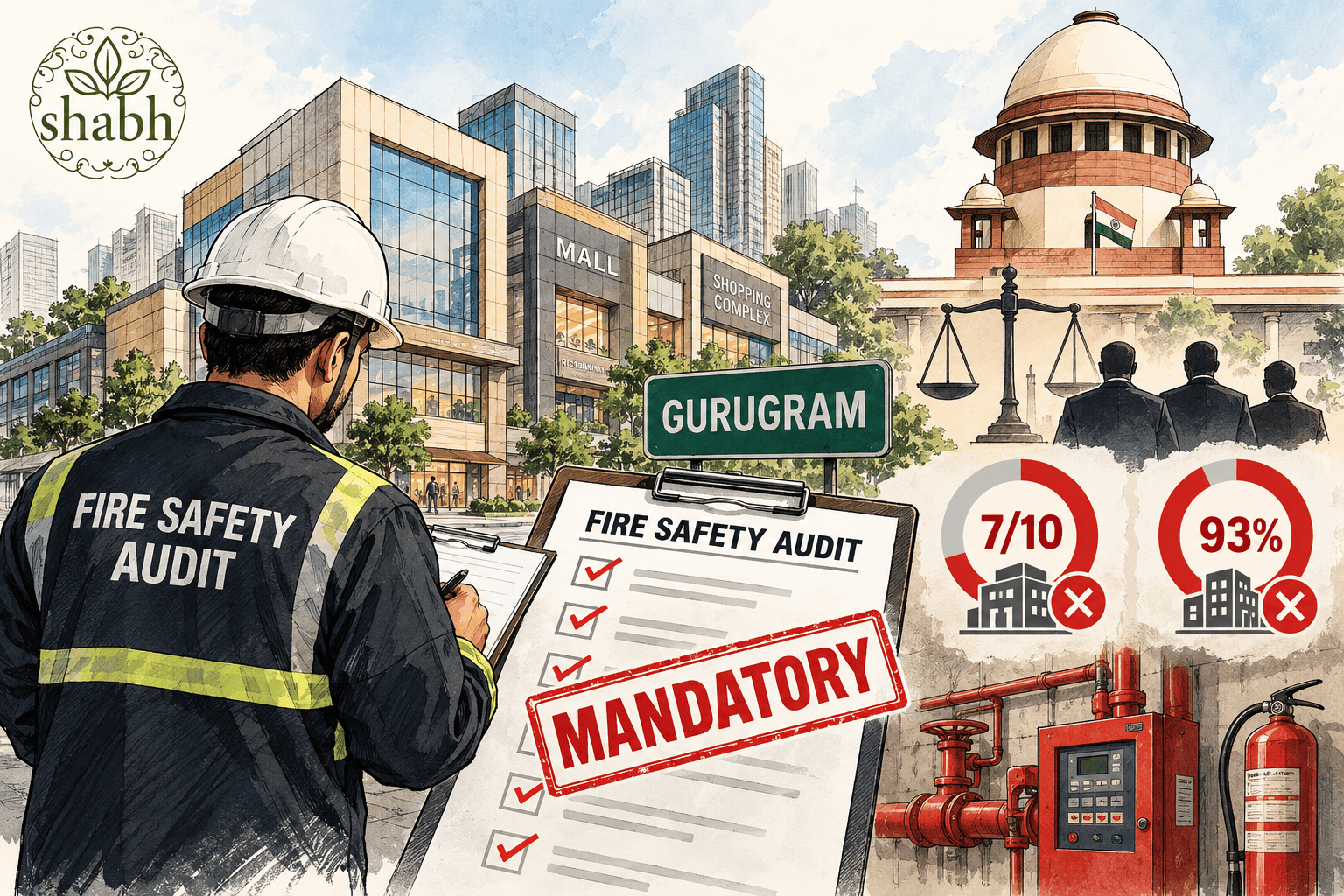
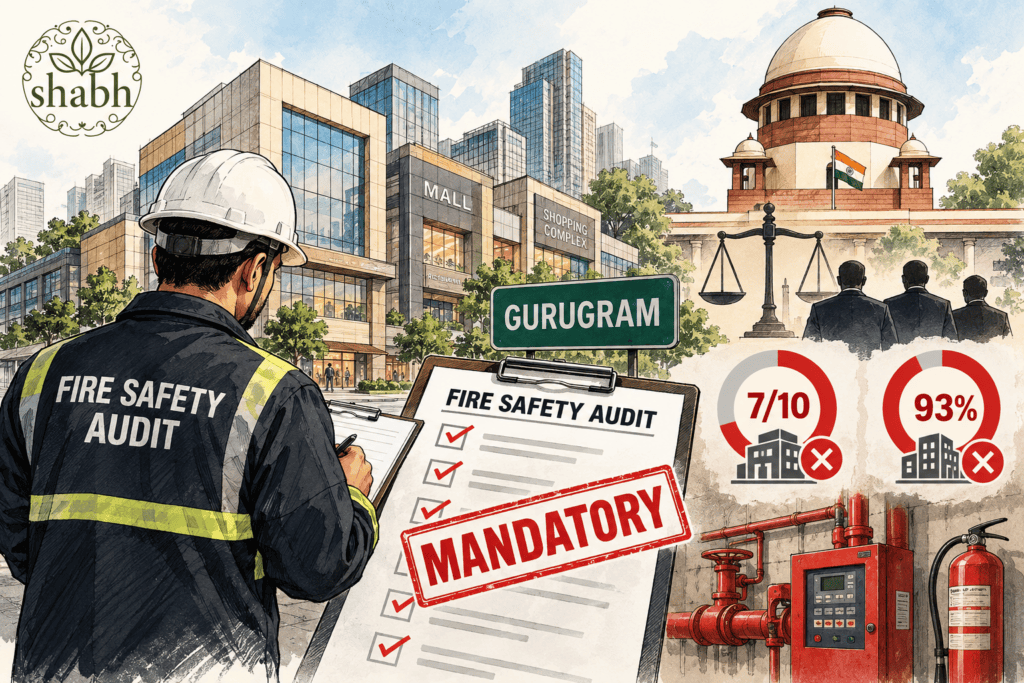
Following a fire at a commercial establishment in Malviya Nagar, the Gurugram administration ordered comprehensive, mandatory fire safety audits across every commercial property in the district — malls, restaurants, shopping complexes, and small commercial units included. The trigger for the order was blunt: a fire department survey found that roughly seven in ten commercial establishments in the city were operating with no fire NOC at all, or one that had expired.(The Tribune)
This isn’t an isolated local directive. It sits inside a much bigger enforcement shift playing out across Delhi-NCR this year. After a series of fatal residential and commercial fires, the Supreme Court took the unusual step of warning that officials of the Municipal Corporation of Delhi, Gurugram, and Lucknow civic bodies could be held personally liable for failing to act on unauthorised construction and fire safety violations —This civic body fire safety liability warning is what’s expected to turn paper-only enforcement into real follow-through this time. citing a separate survey putting Gurugram’s non-compliance rate at 93%. Officials were summoned to appear in person; the court has threatened contempt proceedings for continued inaction.
What this changes for building owners under the new Gurugram fire safety audit rules, inspections are no longer discretionary
Until now, “compliance” in much of NCR meant having a fire NOC on file somewhere, valid or not, and hoping the next inspection didn’t happen. Two things have broken that assumption:
- Audits are no longer discretionary. The Gurugram order applies fire department inspections across the board — not spot-checks triggered by a complaint or an incident nearby, but a district-wide sweep of commercial properties.A fire NOC Gurugram authorities issued five years ago for a different floor plan won’t hold up under this round of inspections.
- Enforcement has a face now. With the Supreme Court naming personal liability for civic officials, local fire departments and municipal bodies have a direct incentive to actually act on violations rather than issue a notice and move on — which is what happened, and stalled, in earlier audit rounds over the past few years.
For a property owner or facility manager, that means the gap between “we have a fire NOC” and “we would pass an inspection today” is no longer a paperwork problem you can defer. It’s the difference between staying open and getting a stop-use notice.
Where buildings actually fail
Run through any standard fire safety audit checklist and the same handful of gaps show up repeatedly in our audit and AMC work across Noida and Gurugram — and they’re rarely about missing equipment — they’re about equipment that exists but wouldn’t function correctly during a real event:
- Fire alarm panels with expired AMC contracts, meaning zones haven’t been tested in months
- Sprinkler systems with adequate coverage on paper but valves left closed after maintenance
- Emergency exits that meet code on the drawing but are blocked, locked, or repurposed as storage in practice
- Fire NOCs issued for an earlier layout that no longer matches the current occupancy or floor plan
An audit under the new order will catch all of these. A NOC on file will not protect you from any of them.
What to do before the inspection reaches you
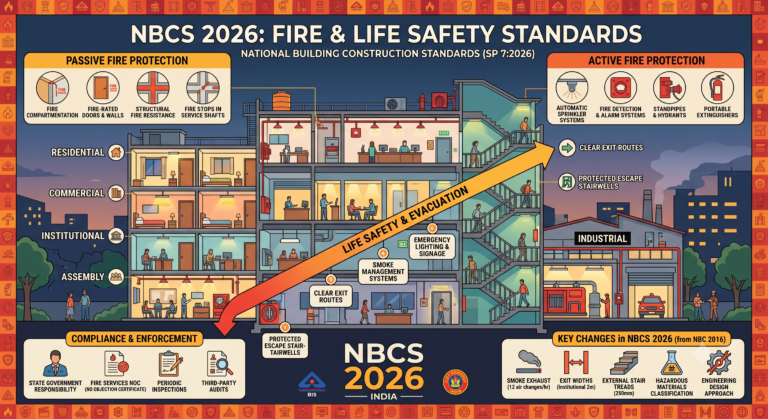
The honest answer is: don’t wait for the notice. A pre-emptive audit against the same checklist fire authorities use — NOC validity, functional testing of alarm and suppression systems, unobstructed egress routes, and occupancy-plan alignment — is materially cheaper and faster to act on than a failed inspection followed by a compliance order with a deadline attached.
Frequently Asked Questions
Q: Does this audit order apply only to Gurugram, or all of NCR?
The current mandatory audit directive was issued specifically by the Gurugram district administration. However, given the Supreme Court’s parallel warning to Delhi, Gurugram, and Lucknow civic bodies over fire safety enforcement, building owners elsewhere in NCR should expect similar district-level orders rather than treating this as a Gurugram-only issue.Treat this as the leading edge of a broader commercial fire safety compliance NCR push, not an isolated local order.
Q: My building already has a fire NOC. Do I still need an audit?
Yes. A valid NOC confirms your building met fire safety requirements at the time it was issued, based on the layout and occupancy declared then. It doesn’t confirm your alarm panel is still being tested, your sprinkler valves are open, or your exits are still clear today. The audits under this order are functional inspections, not paperwork checks. A Gurugram fire safety audit checks whether your systems still function today — not just whether a NOC exists.
Q: What happens if my building fails the audit?
Based on how similar orders have played out in other NCR jurisdictions, expect a compliance notice with a fix-it deadline, followed by escalation — fines, occupancy restrictions, or a stop-use order — if violations aren’t resolved. With personal liability now on the table for officials who don’t enforce, notices are less likely to go unfollowed this time.
Q: How is a fire NOC different from an AMC contract?
The NOC is a one-time (or periodically renewed) certificate confirming your systems met code at issuance. An AMC (Annual Maintenance Contract) is the ongoing service that keeps those systems functional between renewals — testing, servicing, and documenting alarm panels, suppression systems, and detection equipment. A building can hold a valid NOC and still fail an inspection if the AMC has lapsed.
Q: What should I do if I’m not sure whether my building would pass?
Run a pre-emptive audit against the same checklist the fire department uses: NOC validity, functional testing of alarm and suppression systems, unobstructed egress routes, and occupancy-plan alignment. Finding and fixing gaps before an inspector does is materially cheaper than responding to a compliance order under deadline.
Shabh Creations Pvt. Ltd. provides fire and life safety consultancy, design, and AMC services for commercial and industrial facilities in Delhi-NCR. This article is general guidance and does not constitute a site-specific compliance assessment; building-specific requirements should be verified against your facility’s actual layout and occupancy classification.