Fire Safety Training for Building Staff: Who Needs What, How Often, and How to Run a Drill That Works
A fire alarm can detect a fire. It can’t evacuate a building, shut a valve, or decide whether a flickering panel light is a nuisance or a warning. People do that, and in most buildings, nobody has checked whether they know how.
Fire safety training is the part of a fire protection programme that costs the least and gets skipped the most. This guide covers who needs training, what each role should know, how often to refresh it, how to run a fifteen-minute drill that teaches something, and which records to keep.
Why Equipment Alone Isn’t Enough – Fire safety Training
A building can have a well-installed alarm, working extinguishers, and a tested fire pump, and still handle a real fire badly. Training failures usually look ordinary: fire safety training
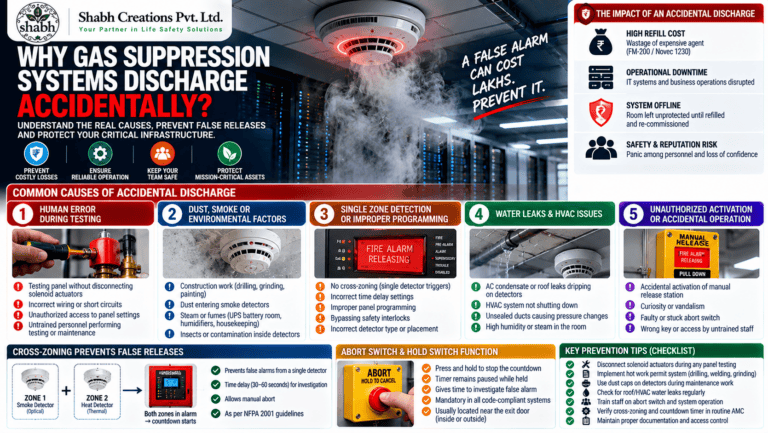
- Silence first, investigate later. The hooter is silenced and the panel reset before anyone identifies the zone. The cause stays unchecked, and the alarm triggers again.
- Hesitation. Without a rehearsed plan, people wait for someone else to act, or leave in different directions.
- Untouched equipment. Extinguishers hang on walls for years, and the first time anyone holds one is the day it matters.
- Knowledge that walks out the door. The one person who knew the pump room has left, and nobody else was shown.
- Paper drills. A signed sheet records that a drill happened, but nobody can describe what they did.
Train by Role, Not by Headcount
One session for everyone is the most common mistake. Different roles need different knowledge.
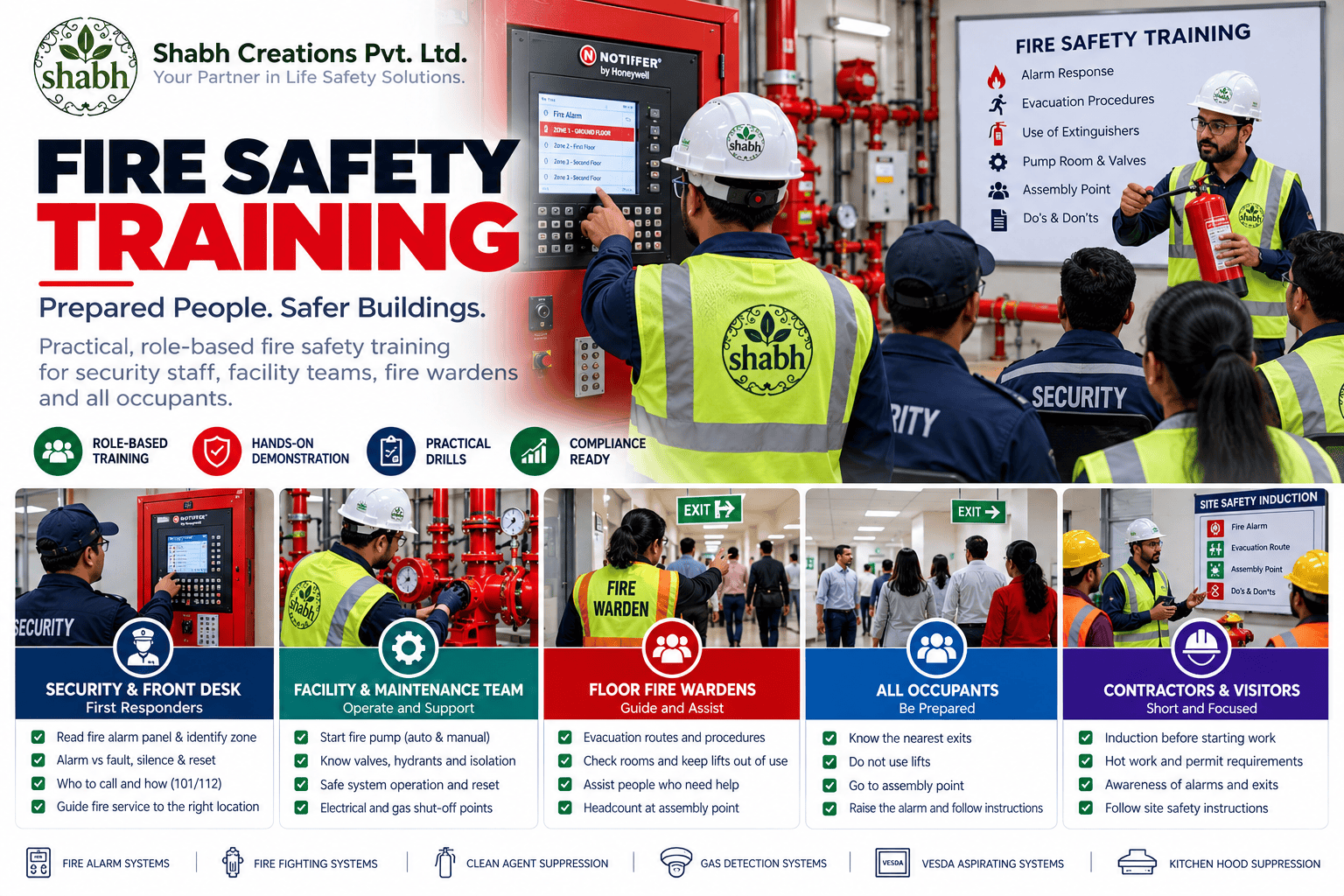
1. Security and front desk (the first responders)
They are usually the first to see an alarm, so they need to:
- Read the fire alarm panel and identify the zone and device in alarm
- Know what silence, acknowledge, and reset mean, and why reset comes only after the cause is found
- Know who to call, in what order, and how to reach the fire service (101 or 112)
- Know how to guide the fire service to the right entrance and the panel
2. Facility and maintenance team
- Isolate a zone safely, and know when not to
- Know where the fire pump room, valves, and hydrant connections are
- Start the fire pump manually if automatic start fails, with the procedure written down
- Know how to restore the system after a test or a false alarm
- Know where electrical isolation points and gas shut-offs are
3. Floor fire wardens
Volunteers who know their floor and are given clear duties:
- Guide people to the nearest safe exit
- Check rooms, toilets, and meeting rooms if it is safe to do so
- Keep lifts out of use and keep stairs orderly
- Report to the assembly point with a headcount
4. All occupants – fire safety training
Everyone needs only a few things:
- The two nearest exits from their desk or work area
- The assembly point
- Not to use lifts
- To raise the alarm and not assume someone else already has
5. Contractors and visitors
A short induction for contractors, particularly those doing hot work or working near detectors, is worth the five minutes. Visitors need clear exit signage and a host who knows the plan.
What the Training Should Cover
The panel. What each indicator means, how to read an alarm versus a fault, and what the correct response is for each. A short laminated one-page guide beside the panel helps.
Extinguishers. The basic sequence is pull the pin, aim at the base of the fire, squeeze the handle, and sweep side to side. Use an extinguisher only on a small fire, with an exit behind you. Practice units or a demonstration make this far more memorable than a slide.
Evacuation. Routes, assembly points, headcount, and what to do for people who need assistance, such as a visitor who uses a wheelchair or a colleague with a temporary injury.
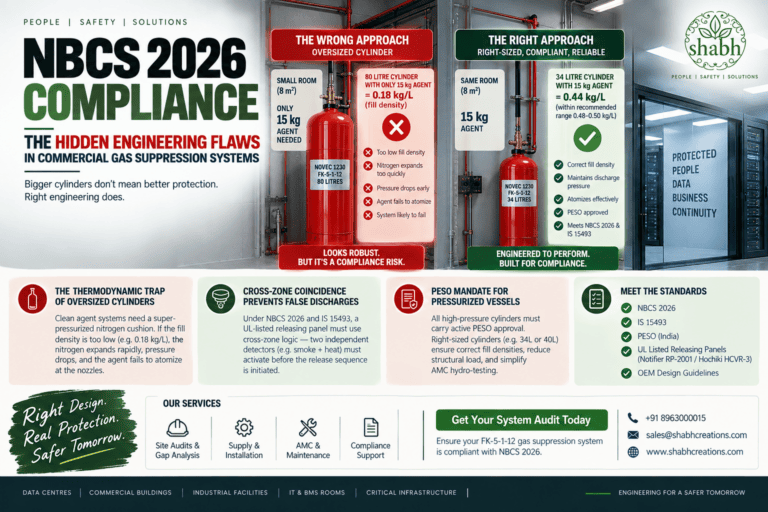
Special hazards. In kitchens, server rooms, battery rooms, chemical stores, and workshops, staff need to know the specific risk. For example, people working in a room protected by a gas suppression system should know what the pre-discharge alarm means and to leave immediately.
Communication. Who calls the fire service, who meets them, who leads, and what to say. Confusion over who is in charge costs time.
How Often Should Training Happen?
Requirements depend on your state, building type, and the applicable code, so check what applies to you and treat that as the minimum. A practical rhythm:
- At joining: a short fire induction for every new employee
- Once or twice a year: a drill, with refresher training for the roles above
- After a change: retrain when staff, layout, or equipment changes
- After a real alarm or incident: a debrief while memories are fresh
- After a system upgrade: a refresher on the new panel or procedure
How to Run a Fifteen-Minute Drill That Teaches Something
A drill is only useful if it exposes problems. Here’s a simple format:
- Pick a scenario and a time. For example: “Alarm in Zone 3, second floor, at 11 a.m.” Tell only the people who need to know in advance. An unannounced drill, with permission from management, reveals more.
- Appoint two observers. Their job is to watch and note, not to join in. One watches the panel and security response, the other watches the stairs and the assembly point.
- Trigger the alarm in the agreed way, such as a test activation, with the vendor if needed.
- Time the key points: how long until someone identified the zone, how long until the floor was clear, how long until a headcount was complete.
- Note what went wrong: blocked exits, someone using the lift, a guard who didn’t know the panel, a warden who wasn’t there.
- Debrief within a day, for ten minutes, and list the fixes with owners and dates.
A drill that finds three problems has done its job. A drill where everything went perfectly, in a building that has never drilled before, deserves a second look.
Records to Keep
Written records matter for audits, insurers, and fire NOC inspections. Keep:
- Dates, attendance, and trainers for each session
- Drill scenarios, timings, and observer notes
- Debrief lists and the closure of each action
- Names of nominated fire wardens and any fire team members
- Training certificates, where external trainers are used
A simple register, kept in the same file as your fire safety documents, is enough.
Common Mistakes
- Treating training as a single event instead of a repeating routine
- Training only the managers, and not the guards and contractors who are actually there at night
- Announcing every drill weeks in advance, so it doesn’t test anything
- Skipping the debrief, so nothing improves
- Keeping no records
- Not retraining after staff turnover
Three Questions to Ask in Your Building This Week
- Could the person on night duty tell me which zone is in alarm, without calling someone?
- When did someone on staff last use an extinguisher, even a practice one?
- If our best facilities person left tomorrow, would anyone else know how to start the fire pump?
FAQ (Frequently Asked Questions)
Q: Who needs fire safety training in a commercial building?
Everyone who works there, with deeper training for security staff, the facility team, and floor fire wardens.
Q: How often should fire safety training be done?
At joining, at least once a year after that, and again whenever staff, layout, or equipment changes. Check your state and building-type requirements too.
Q: Is a fire drill compulsory?
Many occupancies and states expect regular drills, particularly for high-rise, assembly, and industrial buildings. Check the rules that apply to your building.
Q: Should fire drills be announced?
A first drill can be announced, so people know what to expect. Later drills are more useful when only management knows the timing.
Q: What should security guards know about the fire alarm panel?
How to read the zone in alarm, the difference between an alarm and a fault, when to silence and when to reset, and who to call.
Q: Who should run fire safety training?
A competent in-house person or an external trainer or fire safety consultant. For hands-on extinguisher practice and panel training, an external specialist is often best.
Q: What records should I keep?
Dates, attendees, trainers, drill timings, observations, and closure of actions, stored with your other fire safety documents.
Q: How does training help with a fire NOC?
Inspectors may ask about trained staff, drill records, and nominated fire wardens, depending on the building type and state rules.
Shabh Creations Pvt. Ltd. provides fire and life safety consultancy, design, installation, training, and AMC services across India. This article is general guidance, not a site-specific assessment. Training and drill requirements depend on your state, building type, and applicable codes.