Apartment Fire Safety in India:The Complete Resident’s Guide
The Complete Resident’s Guide (Checklist, Escape Plan, and What to Ask Your Society)
Most people in an apartment building assume fire safety is someone else’s job. The builder installed the systems, the society manages them, and the fire department handles the rest. In practice, the outcome of a fire in a flat or a stairwell is largely decided in the first few minutes, and in those minutes the only people on the scene are the residents.
Apartment fire safety is the set of things you can check, prepare, and practise yourself, plus the questions you’re entitled to ask the people who run your building. Most of it takes minutes, not hours, and none of it needs technical knowledge. This guide covers both halves: what to do inside your own flat, and what to look for in the building around you.
Why Apartment Fires Are Different From House Fires
In an independent house, you step out of the door. In an apartment building, you may be several floors up, with a corridor, a staircase, neighbours, and sometimes smoke between you and the street. Four problems show up again and again:
- Blocked escape routes. Shoe racks, bicycles, plant pots, stored cartons, and locked gates in stairwells and corridors slow everyone down, and in smoke even a short delay matters.
- Smoke does the most harm. Smoke travels through corridors and stairwells faster than most people expect and reduces visibility within minutes. Most people caught in a building fire are affected by smoke before they ever see flames.
- Safety equipment that exists but doesn’t work. An extinguisher with a discharged cylinder, a fire alarm with dead batteries, or a pump nobody has tested gives false comfort.
- Everyone assumes someone else has checked. In a shared building, no single resident feels responsible, so basic checks quietly never happen.
Part 1: What to Check Inside Your Flat
Walk your escape route, and find a second one.
Leave your flat and walk to the nearest staircase, then all the way to the ground floor. Count the doors, turns, and landings. Then identify an alternative route in case the first is filled with smoke. If you’ve never done this walk, you’re relying on memory under stress, which is unreliable.
Check your balcony grills and doors.
Many flats have security grills on balconies or windows, and some are locked with no accessible key. A grill that can’t be opened from inside is a trap in a fire. Keep keys where every adult in the home can find them in the dark, or fit a grill with an inside release.
Install smoke alarms, and test them.
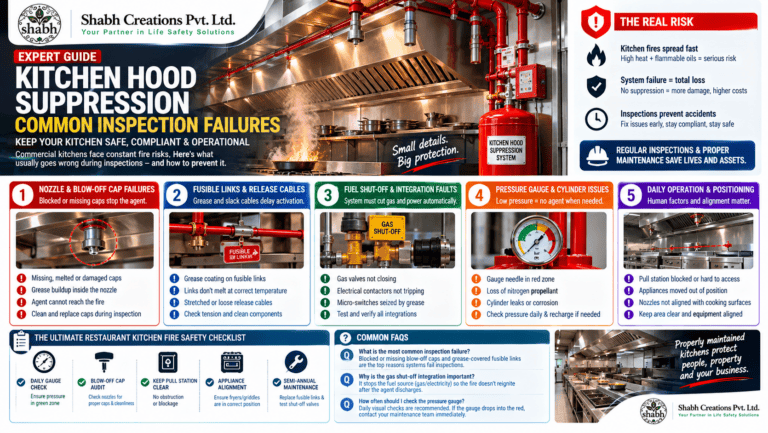
A battery-powered smoke alarm in the corridor outside the bedrooms and another near the kitchen (not directly above the stove, which causes false alarms) is inexpensive and widely available. Test it monthly using the test button and replace batteries once a year, or as the manufacturer advises. A smoke alarm that wakes you up is the single most valuable early-warning measure a household can add.
Keep the right extinguisher within reach.
A small multi-purpose dry powder extinguisher (often labelled ABC) suits most households because it can handle common fuels and is usable on live electrical equipment. Mount it near the exit of the kitchen, not inside a locked cupboard. Check the pressure gauge is in the green zone, the safety pin and seal are intact, and the service date is recent. If you haven’t used one before, read the instructions on the label now: pull the pin, aim at the base of the fire, squeeze, and sweep side to side.
Treat the kitchen and LPG with respect.
Switch off the cylinder regulator when you’ve finished cooking and before leaving the house. Never leave heating oil unattended, and keep a fire blanket or a large lid within reach: covering a pan fire cuts off its oxygen faster than anything else. Never throw water on an oil fire. If you smell gas, don’t switch on lights or electrical appliances, open windows and doors, close the regulator, and leave the flat before calling for help.
Look at your electrics.
Overloaded extension boards, multiple appliances on one socket, warm plugs, a burning smell, or flickering lights are warning signs. Daisy-chaining extension boards is a common cause of overheating. Air conditioners, geysers, and inverters draw heavy loads and should be on properly rated circuits. If a socket or switch is discoloured or warm, stop using it and have an electrician check it.
Be careful with batteries and charging.
Lithium-ion batteries in e-bikes, scooters, and power banks can overheat while charging, especially with cheap or damaged chargers. Charge them in a clear area, not in a corridor or next to the main door, don’t charge overnight while everyone sleeps, and stop using any battery that swells, smells, or gets hot.
Make an escape plan and rehearse it.
Agree on a meeting point outside the building, make sure children and elderly family members know the route, and decide who helps whom. A plan that lives only in your head doesn’t count.
Part 2: What to Check in Your Building
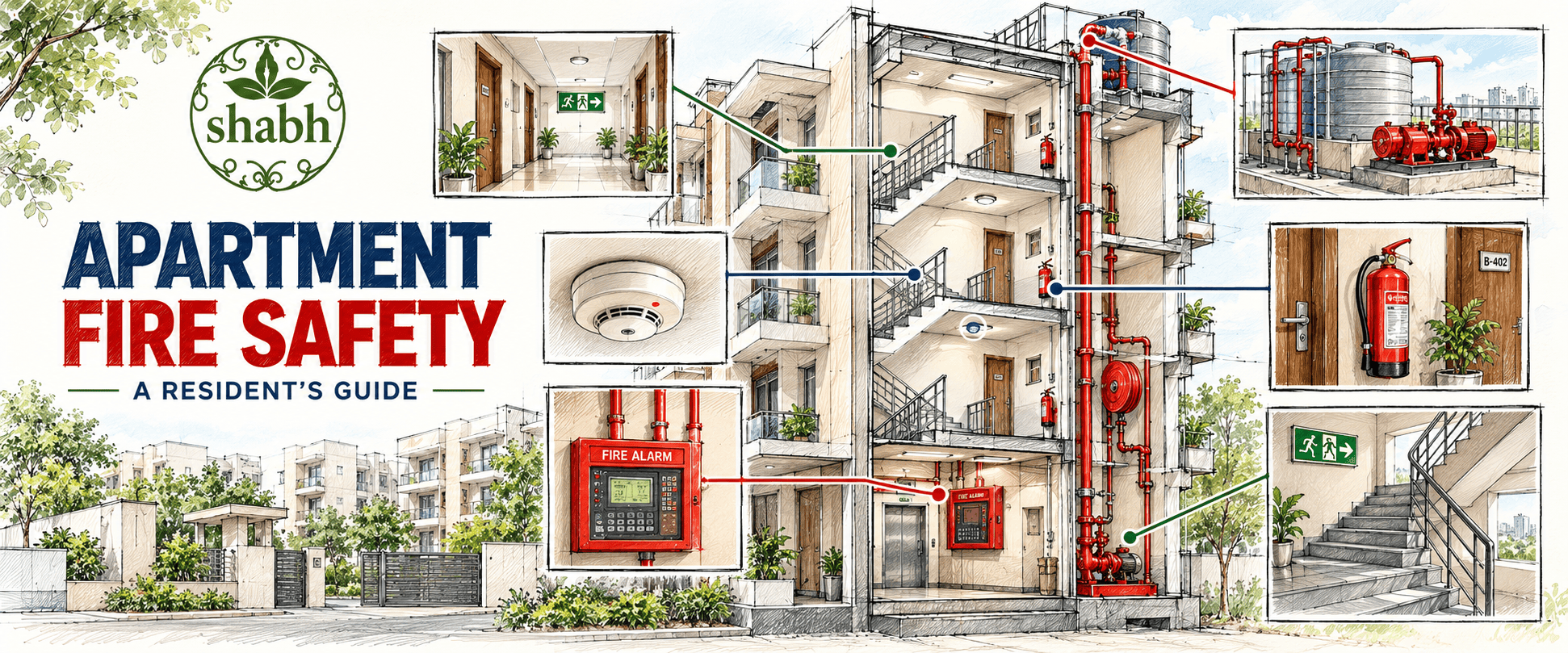
Your safety also depends on systems you don’t control. You can’t inspect a pump room, but you can observe and ask. Here is what a well-maintained apartment building typically has, and the signs that it’s being looked after.
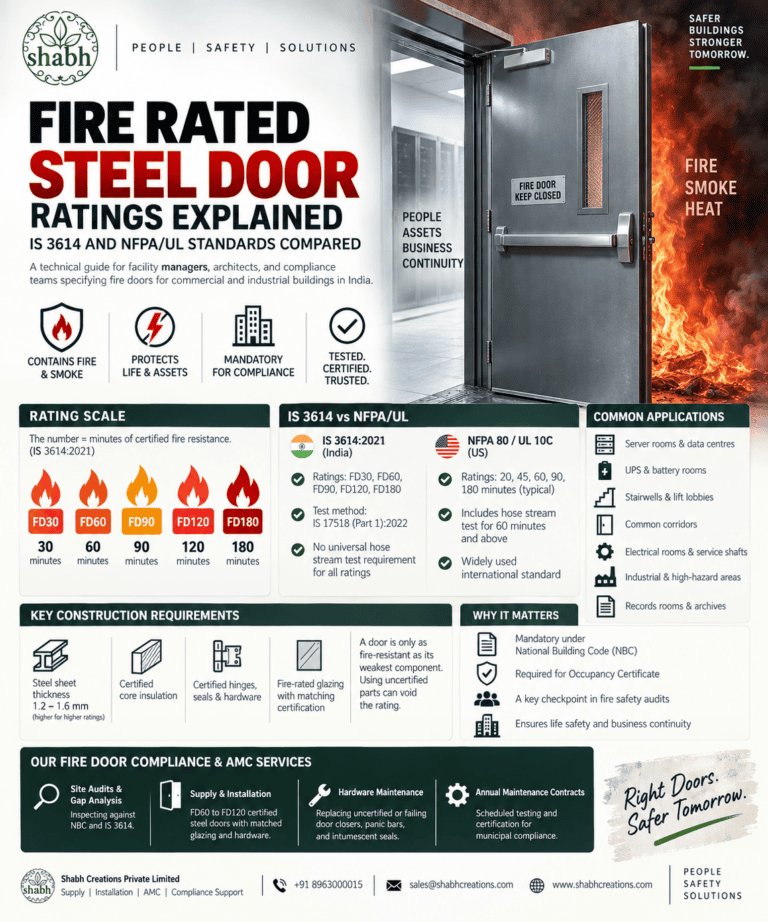
Clear stairwells and corridors. Nothing stored, no locked gates blocking the route, and exit signs and lighting that work. Check also that the terrace or roof door isn’t permanently locked, because a locked terrace door removes a possible refuge.
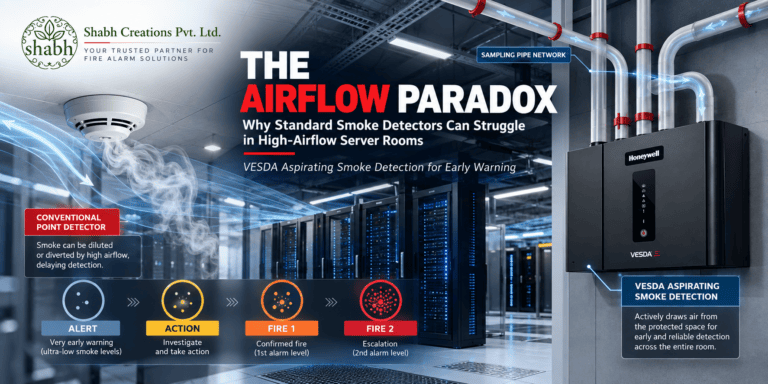
A working fire alarm system. Larger buildings usually have a fire alarm panel, detectors, and manual call points. A panel in the lobby or control room showing a persistent fault light is a sign nobody is acting on it.
Firefighting infrastructure. Depending on the building’s height and local rules, this may include hydrants, hose reels, wet risers (vertical water pipes the fire service connects to), sprinklers, a pump room, and a water tank. These need regular testing, since they’re only useful if they work at the moment of need.
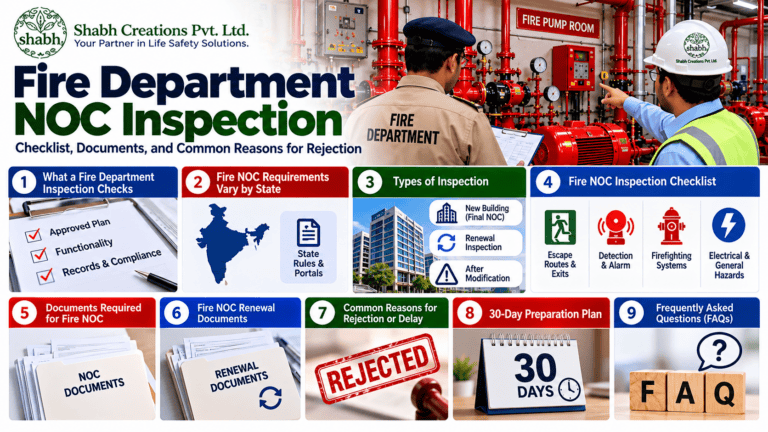
Valid approvals and a maintenance contract. Buildings above certain heights require a fire NOC from the state fire department, with the height thresholds set by state fire rules and the National Building Code. Ask whether the NOC is current, and whether an annual maintenance contract covers the fire alarm and firefighting systems.
Drills and fire wardens. A building that has never held an evacuation drill has never discovered its own problems. Most residents who’ve practised once leave noticeably faster.
Five Questions to Ask Your RWA or Management
You’re entitled to ask these, and a well-run society answers easily:
- Does the building have a valid fire NOC, and when does it expire?
- Is there a maintenance contract for the fire alarm and firefighting systems, and who is the vendor?
- When were the alarm, pumps, and extinguishers last tested, and can residents see the report?
- Has an evacuation drill been held in the last year?
- Who is the nominated fire warden or safety officer, and how do residents contact them?
If answers are vague or “we’ll check,” keep asking in writing. Societies that keep records answer quickly, and those that don’t usually discover problems only during an incident.
If a Fire Starts: What to Do
Read this once now so you don’t have to think about it later.
- Raise the alarm immediately. Shout, use a manual call point if there is one, and call 101 (fire) or 112 (national emergency number).
- Fight the fire only if it is small and you have a clear exit behind you. If it grows or smoke fills the room, leave.
- Check the door before opening it. Feel it with the back of your hand. If it is hot, don’t open it.
- Close doors behind you as you leave. A closed door slows both fire and smoke. Don’t go back for belongings.
- Use the stairs, never the lift. Lifts can stop between floors or open onto smoke.
- Stay low in smoke and cover your nose and mouth with a wet cloth.
- If you can’t get out, go to a room with a window, close the door, seal the gap beneath it with wet towels, signal from the window, and tell the fire services your floor and flat number.
Stay or leave? If the fire is in your flat or smoke is entering, leave. If there is a fire elsewhere in the building and your flat is clear of smoke, follow the building’s fire plan and announcements, and don’t enter a smoke-filled stairwell. When in doubt, the instructions from the fire service on the phone take priority.
When to Call a Professional
Some things residents can’t see: whether detectors respond correctly, whether the alarm triggers lifts and pumps as designed, whether pumps deliver rated flow, or whether fire doors and stairwell pressurisation work. A professional fire safety audit checks these functionally and documents what it finds. Societies that have never had one are the ones that benefit most from it, and the report gives the managing committee something concrete to act on.
Shabh Creations Pvt. Ltd. provides fire and life safety consultancy, design, installation, and AMC services across India. This article is general safety guidance and not a substitute for a professional inspection of your building’s fire protection systems. Requirements vary by state and building height, so check with your local fire department.
FAQ
Q: What is the fire emergency number in India?
Dial 101 for the fire service, or 112, the national emergency number.
Q: Which fire extinguisher should I keep at home?
A small multi-purpose dry powder (ABC) extinguisher suits most households. Mount it where you can reach it quickly, not in a locked cupboard.
Q: How often should I test my smoke alarm?
Test it monthly with the test button, and replace the battery about once a year or as the manufacturer advises.
Q: Is it safe to use the lift during a fire?
No. Always use the stairs. Lifts can fail or open onto smoke-filled floors.
Q: Can residents ask to see the building’s fire NOC and maintenance records?
Yes. Residents can reasonably ask the RWA or management whether the NOC is valid and whether an active maintenance contract and recent test reports exist.
Q: What should I do if I smell gas?
Don’t switch any lights or appliances on or off. Close the regulator, open windows and doors, leave the flat, and call for help from outside.
Q: Is it safe to charge an e-bike or scooter battery inside my flat?
Only with the original or a certified charger, in a clear area, while someone is awake and present. Stop using any battery that swells, smells, or overheats.
Q: Should I leave my flat or stay inside if the fire is elsewhere in the building?
If smoke is entering your flat, or the fire is on your floor, leave. If your flat is clear of smoke, follow the building’s announcements and the fire service’s instructions rather than entering a smoke-filled stairwell.
Q: How often should an apartment building’s fire systems be tested?
Testing frequency depends on the system and the applicable standards, but alarms, pumps, and extinguishers should be inspected on a regular schedule under a maintenance contract, with written records.
Q: Who is responsible for fire safety in an apartment building?
The society or management is responsible for the common systems, and every resident is responsible for what they keep in their flat and the escape routes they use. Both halves matter.