Expert Guide: Kitchen Hood Suppression – Common Inspection Failures
Kitchen hood suppression system common faults
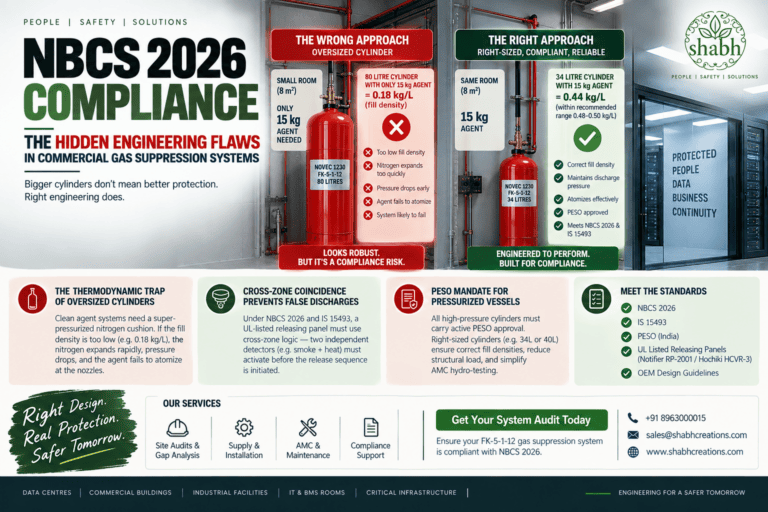
Commercial kitchens operate in a state of high heat and continuous chaos. With open flames constantly interacting with highly flammable cooking oils, the exhaust hood fire suppression system is the last line of defense standing between a minor flare-up and total structural devastation. However, due to the harsh, grease-heavy environment, these systems are highly susceptible to silent mechanical failures.
As a trusted life safety expert, Shabh Creations Pvt. Ltd. executes hundreds of semi-annual kitchen inspections. In this comprehensive guide, we break down the most frequent reasons restaurants fail their municipal fire audits and how you can proactively keep your culinary business safe, compliant, and operational.
The Leading Kitchen Fire Suppression Inspection Failures
The most critical point of failure in any wet chemical system is the discharge nozzle positioned directly over the cooking appliance.
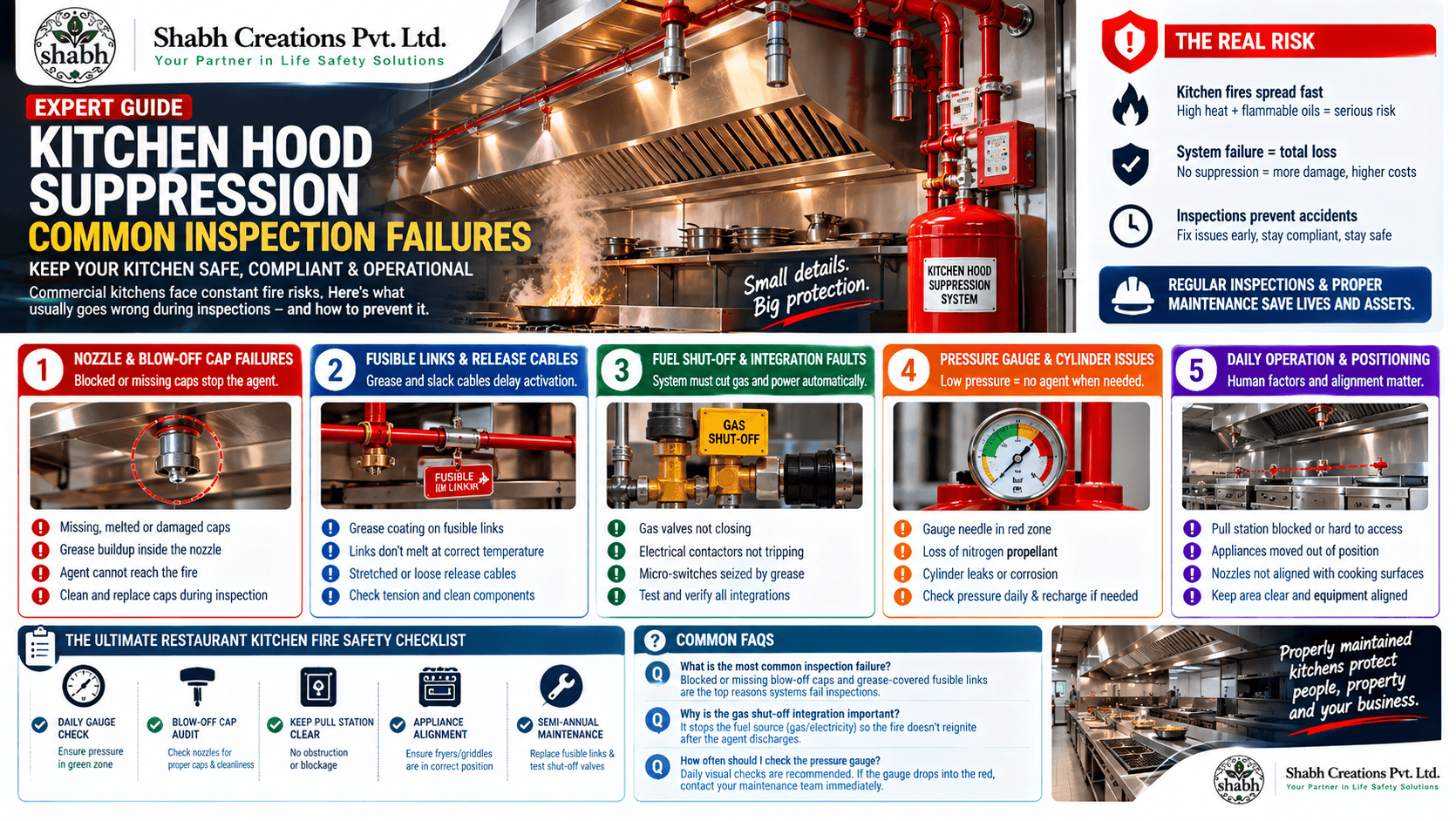
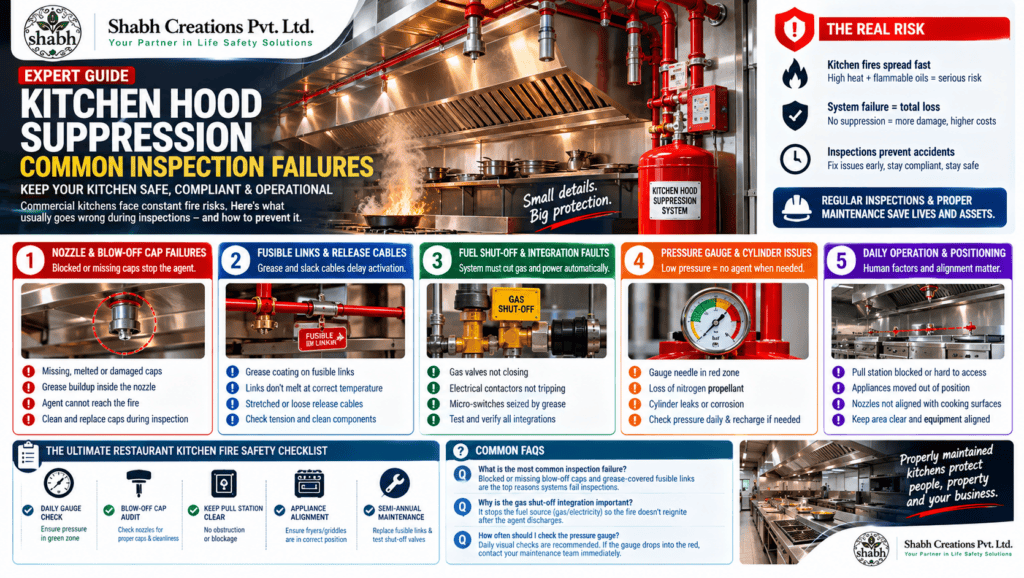
To prevent grease from clogging the brass nozzle orifice, each nozzle is fitted with a silicone or metal blow-off cap. One of the most frequent kitchen fire suppression inspection failures occurs when these caps are missing, melted, or heavily coated in grease. Without a protective cap, airborne grease vapors harden inside the nozzle. During a fire, the wet chemical agent will be completely blocked, rendering the entire suppression system useless. An expert contractor will always inspect, clean, and replace these caps during every routine visit.
Kitchen Hood Suppression System Common Faults
Kitchen fire systems rely on a mechanical network of stainless steel cables and heat-sensitive fusible links to trigger the gas release.
A leading cause of failure is grease accumulation on these fusible links. The links are designed to melt and snap at a highly specific temperature (e.g., 360°F or 450°F). If they are heavily insulated by layers of hardened grease, they will not melt in time, delaying the system’s activation. Furthermore, stretched or slackened release cables are major kitchen hood suppression system common faults. If the cable lacks proper tension, pulling the manual emergency station will not generate enough force to puncture the cylinder’s seal.
Essential Kitchen Hood Grease Fire Safety Integrations
Extinguishing a deep fryer fire is a multi-step process. Spraying the wet chemical agent is step one, but step two is equally critical: shutting off the fuel source.
If the suppression system discharges but the gas line remains open, the fire will quickly re-ignite once the chemical foam dissipates. Failing to automatically shut down the gas valves or electrical contactors is a massive violation of kitchen hood grease fire safety codes. During our expert inspections, we frequently discover that the micro-switches inside the control head have seized due to grease exposure, preventing them from sending the critical shut-off signal to the fuel lines.
Proactive Kitchen Hood Suppression Maintenance Tips
While a reliable supplier must perform your in-depth semi-annual maintenance, restaurant staff play a vital role in daily fire prevention.
One of our top kitchen hood suppression maintenance tips is to mandate a daily visual inspection of the system’s pressure gauge. The needle must always sit firmly in the green zone. If the needle drops into the red, the cylinder has lost its nitrogen propellant and will fail to push the heavy liquid agent through the pipes during an emergency. If you notice a pressure drop, you must contact your trusted maintenance team immediately for a recharge.
The Ultimate Restaurant Kitchen Fire Safety Checklist
To ensure your facility passes its municipal fire audits on the first attempt, implement this rigorous restaurant kitchen fire safety checklist for your kitchen staff and management:
- Daily Gauge Check: Verify that the suppression cylinder’s pressure gauge is reading in the green zone before starting the morning prep shift.
- Blow-Off Cap Audit: Visually inspect the discharge nozzles over the fryers and griddles to ensure the silicone caps are securely in place and free from severe grease buildup.
- Keep the Pull Station Clear: Ensure the manual emergency pull station is highly visible and never blocked by rolling carts, shelving, or bulk ingredient bags.
- Appliance Alignment: If you move the deep fryers for cleaning, ensure they are pushed back into their exact original positions. If an appliance is out of alignment, the discharge nozzle will miss the hazard zone entirely.
- Mandate Semi-Annual Maintenance: Ensure you have an active Annual Maintenance Contract (AMC) with a reliable contractor to replace fusible links and test the gas shut-off valves every 6 months.
Frequently Asked Questions (FAQs)
Why do fusible links cause so many kitchen fire suppression inspection failures?
Fusible links are the primary detection mechanism in a kitchen hood system. They are designed to melt at exact temperatures. However, because they sit directly in the grease-laden exhaust airflow, they degrade rapidly. The National Fire Protection Association (NFPA 96 & 17A) strictly mandates that all fusible links must be replaced semi-annually (every 6 months) by a reliable contractor to prevent delayed system activation.
Can improper hood cleaning lead to kitchen hood suppression system common faults?
Absolutely. If a third-party hood cleaning company uses aggressive pressure washers or harsh chemicals without protecting the suppression system, they can accidentally bend the discharge nozzles, snap the tension cables, or introduce water into the pneumatic lines. This directly causes severe kitchen hood suppression system common faults that compromise the entire network.
What is the legal requirement for kitchen hood grease fire safety inspections in India?
To maintain compliance with the Bureau of Indian Standards (BIS)
and local municipal Fire NOC requirements, commercial kitchens must undergo a comprehensive wet chemical suppression inspection every six months. This inspection must verify cylinder pressure, replace detection links, and test the automatic fuel shut-off interlocks to ensure maximum kitchen hood grease fire safety.