Why UPS Rooms Need Fire Detection, Gas Suppression, and Gas Leak Detection Together.
By Mr. Subhash vats, Commercial Fire Safety & Electrical Maintenance Division, Shabh Creations Private Limited.
UPS room fire safety ?
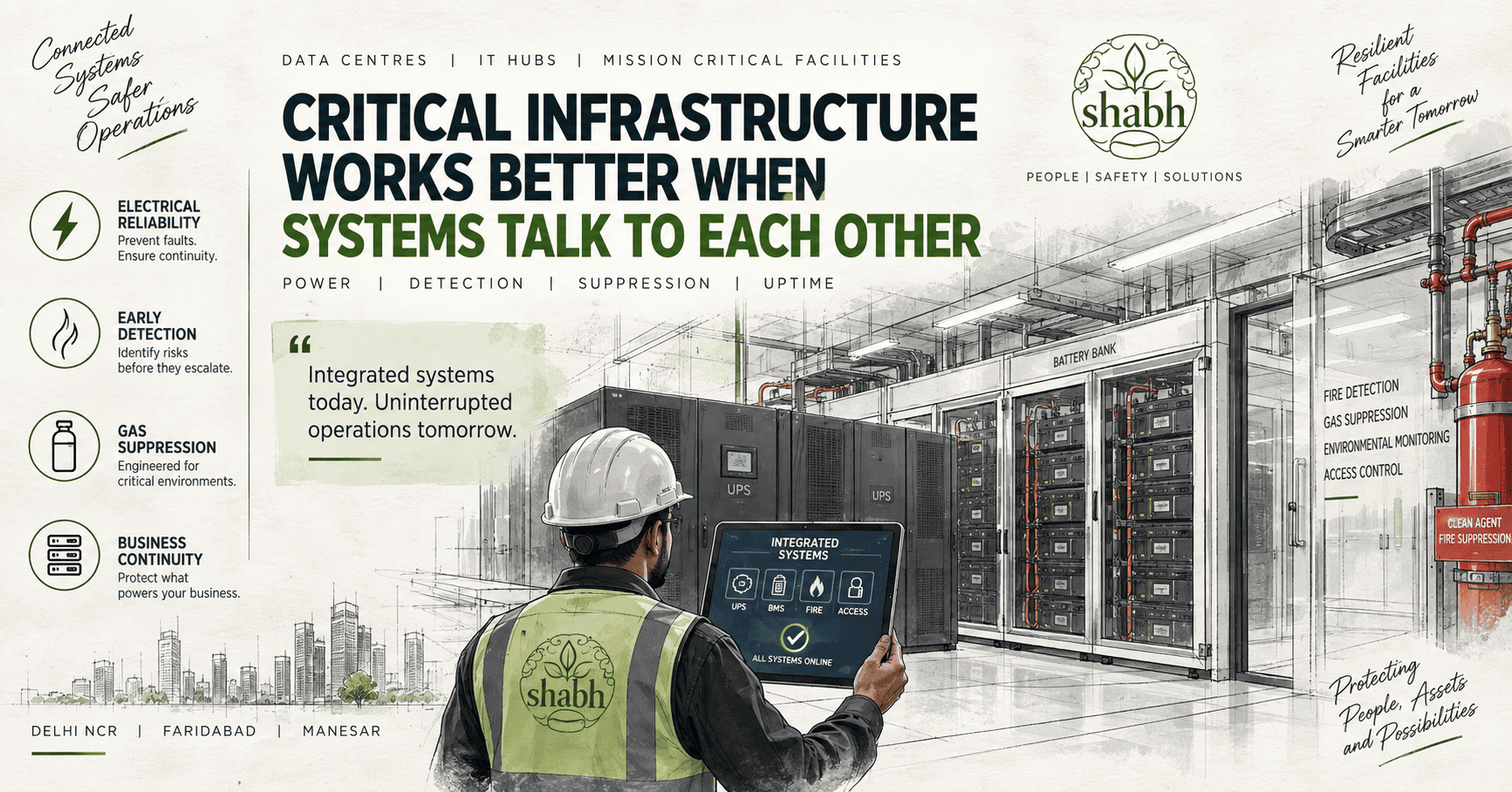
As data centres and critical IT hubs across Delhi NCR, Faridabad, and Manesar scale their workloads, facility managers are pushing legacy infrastructure to its limits. The UPS and battery room is the beating heart of these operations, but it is also the most volatile. Treating electrical maintenance, fire detection, and gas suppression as isolated systems in these environments creates dangerous operational blind spots.
We help organizations operate critical infrastructure more reliably by ensuring these systems talk to each other before a fault becomes a catastrophic failure.
The Chain Reaction in Critical Infrastructure
A failure in a UPS room is rarely just an electrical problem. With the increasing density of server racks and the shift in battery chemistries (such as the widespread adoption of lithium-ion), an overheating component can rapidly trigger a thermal event. If your facility relies on separate vendors for different safety components, the cause-and-effect logic required for a safe shutdown is often broken.
The Central Electricity Authority (CEA) has recently reinforced this interconnectedness for battery systems. Under the CEA (Measures relating to Safety and Electric Supply) Amendment Regulations, 2026, battery systems operating above 650V must be designed with “two-fault tolerance”. This means the system must maintain a safe operational state or trigger a fail-safe shutdown even if two simultaneous, independent faults occur (e.g., thermal overcharge combined with a localized short circuit).
Furthermore, international standards like NFPA 75 (Fire Protection of Information Technology Equipment) now point directly to NFPA 855 (Stationary Energy Storage Systems) to govern the strict physical separation, thermal management, and suppression required for lithium-ion battery infrastructure. When these standards are assessed together rather than in silos, a chain reaction is interrupted at the earliest possible stage.
| Fragmented Maintenance Approach | Integrated Technical Supervision |
| Independent AMCs with isolated reporting. | Unified audits assessing detection, suppression, and electrical loads. |
| Basic smoke detectors missing smoldering wires. | VESDA (Very Early Smoke Detection Apparatus) linked to the BMS. |
| Gas suppression firing in isolated zones. | Programmed sequencing coordinating suppression with access control. |
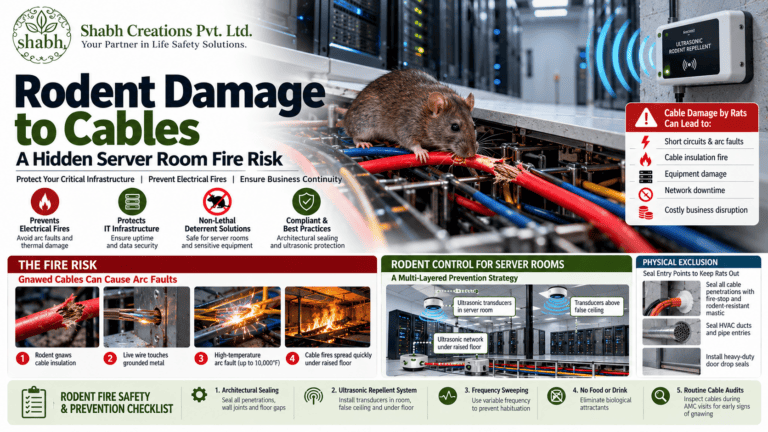
| Leak detection treated as a plumbing issue. | Water leak detection integrated as a critical electrical safeguard. |
What a Professional Audit Actually Produces
An effective audit moves beyond merely checking boxes on an equipment list. Shabh Creations approaches the AMC and SITC lifecycles as comprehensive technical supervision. A professional review of your server and UPS rooms should clearly document the interdependent risks, complying with both local directives and global best practices.
- HT/LT Distribution Assessment: Evaluating the panels supplying the server environment to catch electrical anomalies before they ignite.
- Fault ID Mapping: Determining if legacy clean agent systems are truly ready to deploy without causing secondary damage to electronics.
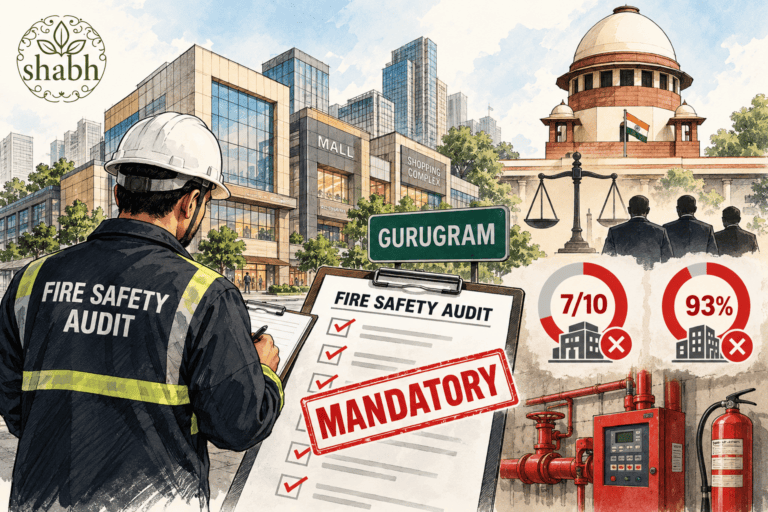
- Mandatory Third-Party Audits: Ensuring your facility complies with the new CEA requirement that mandates an independent fire safety audit within three months of the April 2027 regulatory commencement.
- Integration Testing: Verifying cause-and-effect logic between the fire alarm panel, BMS monitoring at the cell/rack level, and access control systems for safe emergency egress.
- Corrective Action Planning: Prioritizing facility uptime and proactive lifecycle management.
Securing Your Facility Operations
Protecting a server room requires more than simply installing a gas cylinder and walking away. Whether you are managing a high-density corporate data centre in Noida or a critical hub room in a Sonipat manufacturing plant, true resilience requires a unified approach. By assessing your fire, life safety, and electrical infrastructure as one interconnected ecosystem, you transition from reactive repairs to guaranteed business continuity.
Frequently Asked Questions (FAQ)
We are replacing our old lead-acid batteries with lithium-ion in the UPS room. Will our existing Novec 1230 / FM-200 gas suppression system still work?
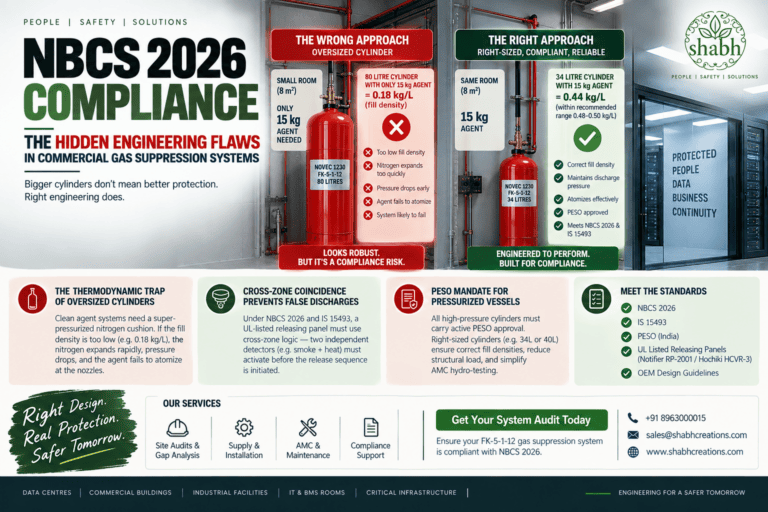
Not necessarily. While clean agents like Novec 1230 or FM-200 are excellent for electrical fires, a lithium-ion battery in “thermal runaway” produces its own oxygen and can continue to burn even in a gas-flooded room. NFPA 855 dictates specific thermal management, exhaust, and physical separation strategies for lithium-ion that go far beyond standard gas suppression. If you are upgrading your batteries, your suppression system and logic must be re-engineered.
Will the sudden discharge of a clean agent system damage our server hard drives?
It is a very real risk if the system wasn’t properly engineered. The sudden, high-pressure release of gas through standard nozzles can generate noise exceeding 130 decibels (acoustic shock), which can physically damage the read/write heads of sensitive Hard Disk Drives (HDDs). A professional SITC contractor will specify acoustic/silenced nozzles for data environments to suppress the fire without destroying the data.
Our BMS already monitors UPS battery temperatures. Why do we need a separate VESDA or fire alarm panel?
A Building Management System (BMS) is designed for operational monitoring, not life safety. It is not listed or certified to control emergency suppression. Fire codes strictly require a dedicated, certified Fire Alarm Control Panel (FACP) to execute life-safety actions—like triggering gas release, dropping HVAC power, and opening access control doors. The BMS provides the early warning; the FACP executes the emergency logic.
During an AMC, how do you actually test the gas suppression cause-and-effect logic without discharging expensive cylinders?
A professional maintenance audit never relies on guesswork. We physically disconnect the electronic solenoid actuators from the cylinders. We then simulate a fire by triggering the cross-zoned detectors (e.g., triggering both VESDA and a conventional smoke detector). We verify that the panel starts the countdown timer, the pre-discharge alarms sound, the HVAC dampers close, and the electrical signal successfully reaches the (disconnected) actuator—proving the system will work flawlessly in a real emergency, with zero gas wasted.
Sources & Statutory References
- Central Electricity Authority (CEA): CEA (Measures relating to Safety and Electric Supply) Amendment Regulations, 2026 (Gazette of India No. 231). Mandates two-fault tolerance, continuous BMS monitoring, and independent third-party fire audits for BESS infrastructure above 650V effective April 1, 2027.
- NFPA 75 (2024 Edition): Standard for the Fire Protection of Information Technology Equipment. Sets risk-driven fire protection, detection, and clean-agent suppression requirements for IT spaces, explicitly removing legacy lithium-ion battery requirements to align with NFPA 855.
- NFPA 855: Standard for the Installation of Stationary Energy Storage Systems. Governs installation location, quantity limits, thermal management, and fire separation for high-density battery infrastructure.